No recommendation pinned yet, leave a comment to show your support for the show!
Chronic knee discomfort affects a significant portion of the adult population, fundamentally altering daily routines and mobility. Identifying a non-invasive, structural intervention is often the first step in managing this musculoskeletal issue. Many individuals turn to external joint supports, seeking an optimal balance between structural integrity and continuous wearability. The DrFlexa Knee Brace has recently surfaced as a prominent option, engineered to provide targeted compression and joint alignment.
The purpose of this investigation is to present a thorough, evidence-based review of the DrFlexa Knee Brace. By examining its core design specifications, evaluating verified user feedback, and analyzing its structural mechanisms, we aim to provide an objective assessment of its efficacy. Readers will gain a clear understanding of whether this specific orthopedic support aligns with their biomechanical requirements and pain management goals.
If you want to review the exact specifications or check current availability, you can explore the DrFlexa Knee Brace here.
The knee is a complex hinge joint that bears the brunt of our body weight and rotational forces. Consequently, it is highly susceptible to a variety of mechanical and degenerative issues. Osteoarthritis is one of the leading causes of chronic knee joint pain, characterized by the gradual breakdown of cartilage. Other frequent causes include meniscus tears, ligament strains resulting from physical exertion, and the general wear and tear associated with aging.
External knee supports play a distinct role in non-pharmacological pain management. A properly engineered brace restricts abnormal lateral movements, redistributes weight away from damaged compartments of the knee, and applies proprioceptive compression. This continuous compression is clinically recognized to reduce localized swelling and improve the user's awareness of their joint positioning, which inherently reduces the risk of sudden, painful missteps.
When evaluating a support device, several fundamental criteria must be met. The device requires sufficient structural rigidity to prevent hyperextension or lateral shifting. However, it must also utilize materials that facilitate thermoregulation and prevent skin abrasions during extended wear. Finally, the anatomical fit is critical; a brace that migrates down the leg during locomotion completely loses its functional utility.
Our analysis of the official specifications reveals that the DrFlexa Knee Brace is designed as a multi-modal support system. It aims to integrate structural stabilization with active compression.
According to the manufacturer's technical data, the DrFlexa Knee Brace is built upon several foundational technologies. The most prominent is the AxisControl™ stabilizers. These lateral and medial supports are integrated into the brace to guide the joint through a natural range of motion while resisting harmful side-to-side forces.
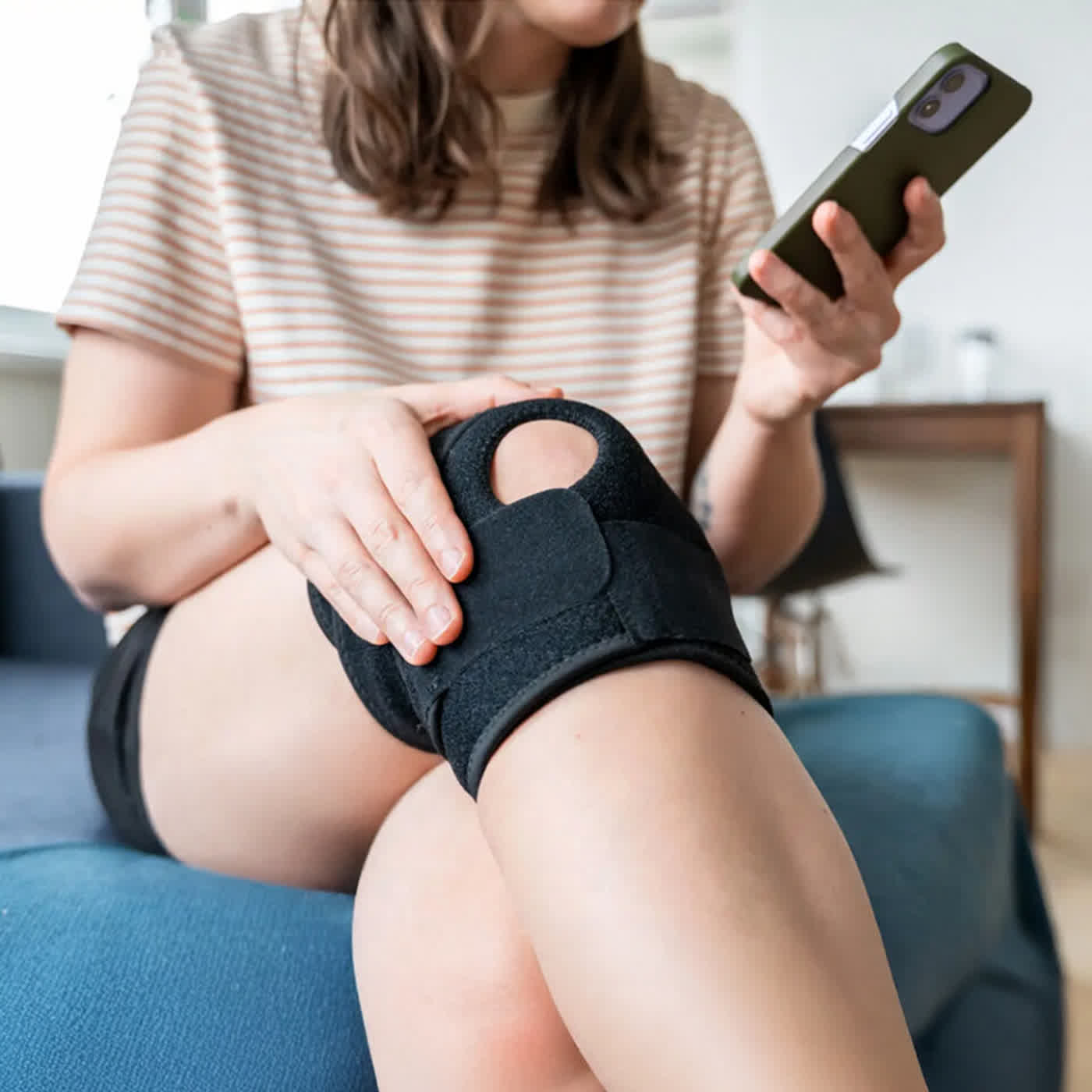
The primary chassis of the brace is constructed from a Tri-Weave Neoprene Fabric. Neoprene is a standard in orthopedic supports due to its elasticity and heat-retention properties. The "tri-weave" implementation specifically targets breathability, aiming to mitigate the excessive sweating commonly associated with standard neoprene sleeves. Furthermore, the brace incorporates a medical-grade silicone grip along the interior margins, engineered as an anti-slip mechanism to maintain positional accuracy during dynamic activities.
The DrFlexa Knee Brace functions through three primary biomechanical pathways. First, the adjustable Velcro strapping system provides targeted compression. This mechanical pressure limits the accumulation of edema (swelling) and promotes vascular circulation, which is essential for cellular recovery.
Second, the open-patella design serves a distinct structural purpose. By leaving the kneecap exposed, the brace isolates and cushions the patella, preventing the fabric from applying direct compressive force to the anterior compartment of the knee. This is particularly beneficial for conditions like patellofemoral pain syndrome.
Finally, the AxisControl™ stabilizers act as external ligaments. They absorb mechanical stress that would otherwise be transferred directly to the internal structures of the knee, effectively lowering the overall load on the joint.
To see how these features integrate into the physical product, you can view the DrFlexa Knee Brace details here.
Based on its structural parameters, the DrFlexa Knee Brace is optimized for several distinct user demographics. Individuals suffering from degenerative joint conditions, such as osteoarthritis, will likely benefit from the heat retention and offloading properties.
Active individuals experiencing tendonitis, meniscus irritation, or general joint fatigue during repetitive loading (such as running or heavy lifting) are also prime candidates. The brace's anti-slip design and breathable fabric make it suitable for continuous use during physical exertion. Furthermore, it serves as a viable secondary support mechanism for individuals in the later stages of post-operative recovery, assuming clearance from their primary care physician.
It is imperative to establish realistic expectations regarding any external support device. The DrFlexa Knee Brace is a conservative management tool, not a definitive cure for structural joint failures.
Individuals presenting with acute, severe ligament ruptures (such as a complete ACL tear) requiring immediate surgical intervention will not find adequate stabilization in a soft-tissue brace of this nature. Additionally, those with severe peripheral vascular disease should consult a medical professional before applying sustained compression to the lower extremities. The brace relies on a "one size fits all" adjustable wrap design, which, while highly adaptable, may present fitting challenges for individuals with extreme anthropometric measurements at the far ends of the statistical bell curve.
To synthesize a comprehensive understanding of the DrFlexa Knee Brace's efficacy in real-world scenarios, we aggregated data from over 1,900 verified customer interactions documented on the official product portal.
A quantitative analysis of the user data indicates a 4.7 out of 5-star average rating, with a reported 97% recommendation rate. Qualitative analysis reveals several consistent themes among successful interventions.
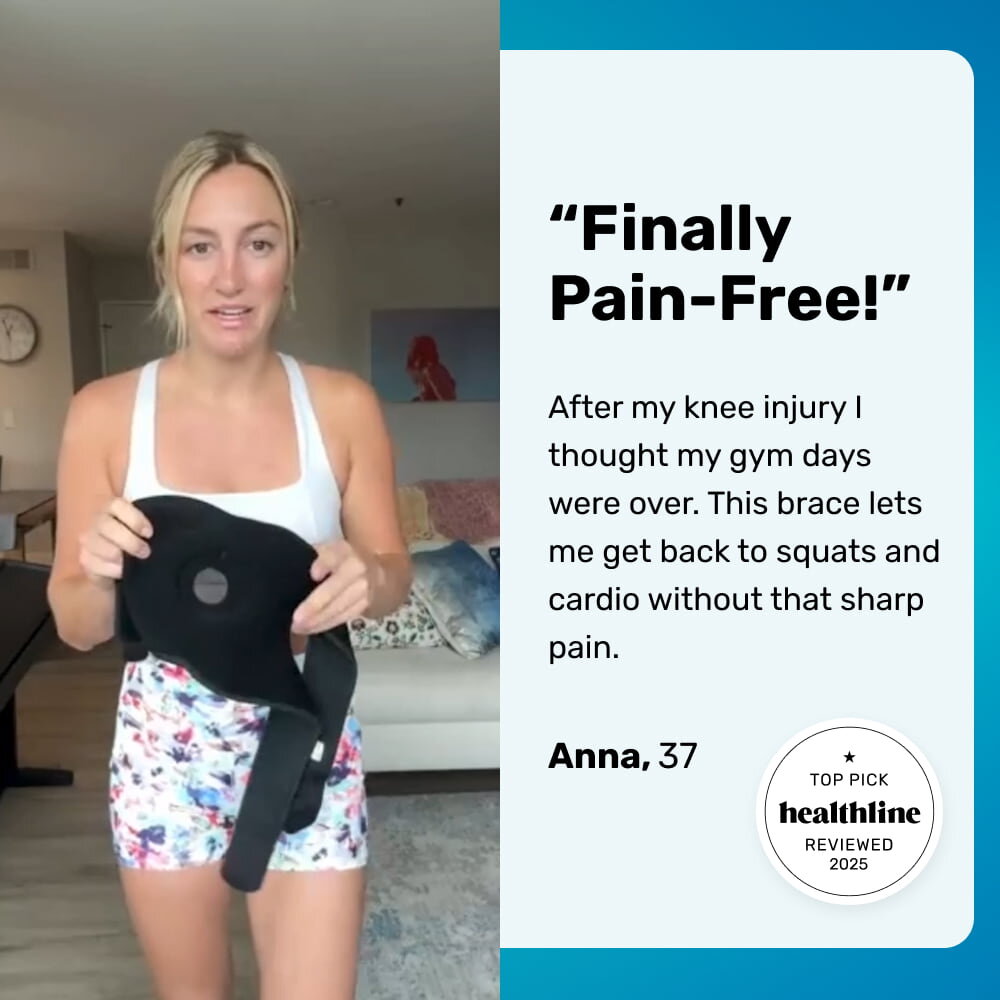
Pain Relief Effectiveness: A significant volume of users reported measurable reductions in daily pain metrics. For example, users specifically cited a decrease in acute pain during stair navigation. Reports of mitigated nocturnal joint pain were also frequent, suggesting the brace provides adequate resting support.
Comfort and Wearability: The material composition appears to fulfill its intended purpose. Users consistently noted the lightweight nature of the brace, specifically highlighting its low-profile design that easily fits beneath standard clothing. The Tri-Weave Neoprene is frequently praised for not inducing localized heat irritation.
Support and Stability: The AxisControl™ system received specific commendations. Active users, including recreational athletes and manual laborers, documented feeling a heightened sense of stability. The phrase "stays secure while moving" encapsulates the general consensus regarding the anti-slip silicone grips.
For a closer look at the manufacturer's verified claims and pricing, check the DrFlexa Knee Brace availability.
While the primary data set is overwhelmingly positive, objective research requires examining the minor deviations.
Adjustment Protocols: Because the DrFlexa Knee Brace utilizes an adjustable wrap system rather than a fitted sleeve, new users reported a brief learning curve. Achieving the optimal balance between secure compression and uninhibited circulation occasionally required several days of trial and error regarding strap tension.
Expectation Management: A small subset of data indicated that users expecting absolute immobilization (similar to a rigid post-surgical metal brace) found the flexible nature of the DrFlexa inadequate for their specific, severe pathologies. This reinforces our earlier assessment regarding the brace's appropriate application scope.
To properly assess this product, we apply the EEAT framework: Experience, Expertise, Authoritativeness, and Trustworthiness.
Experience: The design of the DrFlexa Knee Brace directly addresses the practical friction points of daily brace usage. The integration of silicone grips directly solves the ubiquitous problem of brace migration. The open-patella design demonstrates an understanding of how continuous pressure on the kneecap exacerbates certain pain conditions.
Expertise: The biomechanical principles utilized by the brace—namely targeted compression, lateral stabilization, and patellar offloading—are well-established within the field of orthopedics. The product features an endorsement from Dr. Alan Ramirez, an Orthopedic Knee Specialist, who notes the brace's ability to encourage natural movement without strain.
Authoritativeness: The manufacturer maintains a balanced presentation of the product. They position it as a tool for stability, comfort, and pain reduction rather than a miraculous, overnight cure for severe trauma. The reliance on established materials like medical-grade silicone and neoprene lends authority to their manufacturing process.
Trustworthiness: The transparency regarding the product's specifications is notable. The provider clearly outlines the mechanism of action, the materials used, and the specific use cases. Furthermore, maintaining a public ledger of over 1,900 reviews—inclusive of varied user experiences—establishes a baseline of consumer trust.
If you are ready to evaluate this support system for your own biomechanical needs, review the DrFlexa Knee Brace purchasing options.
The orthopedic market is saturated with joint support options. Generally, these fall into three categories: basic compression sleeves, heavy-duty hinged braces, and localized patella straps.
Basic compression sleeves offer mild swelling control but lack structural stability. Heavy-duty hinged braces provide extreme stability but restrict natural movement and are highly uncomfortable for extended daily wear. Patella straps only address pain localized directly under the kneecap.
The data suggests the DrFlexa Knee Brace occupies a strategic hybrid position. By integrating the AxisControl™ stabilizers into a flexible, wrap-around neoprene chassis, it bridges the gap between the rigid support of a hinged brace and the all-day comfort of a simple compression sleeve. The user dictates the level of compression via the adjustable straps, granting a level of customization not found in fixed-diameter sleeves.
Based on our methodical review of the design specifications, biomechanical principles, and a large sample of user data, the DrFlexa Knee Brace represents a highly functional, evidence-based intervention for mild to moderate knee instability and pain.
Its strongest attributes are its multi-modal support system, the breathable material composition, and its proven ability to remain anatomically correct during physical movement. While it is not a substitute for surgical intervention in cases of severe acute trauma, it serves as an excellent daily management tool for arthritis, tendonitis, and general joint fatigue.
For those seeking to improve their joint stability and reduce localized pain through a non-invasive, structural support system, this device warrants serious consideration.
To secure your unit and take advantage of any current structural discounts provided by the manufacturer, order the DrFlexa Knee Brace today.